News and Insights
How Communication Is Shaping the Future of Metabolic Health in the GCC
February 10, 2026
If innovation moves faster than understanding, it doesn’t transform systems, it fractures them. And nowhere is this more visible today than while communicating health innovation in the Gulf Cooperation Council (GCC), where metabolic health has turned from a clinical issue into a full-blown public, policy, and media conversation. Across the GCC, obesity, diabetes, and related metabolic conditions are no longer framed as individual lifestyle challenges. They are now recognised as threats to economic productivity, healthcare sustainability, and national resilience. Governments are responding with prevention-led strategies, ambitious health visions, and major investments in innovation. The recently launched FINN Partners report Metabolic and Lifestyle Health in the GCC: Innovation, Access & Behavioural Change highlights that science alone is not steering this transformation and offers a health communications strategy for GCC leaders navigating metabolic health in a highly visible, highly scrutinised environment.
Health communication in the GCC: When medicine becomes a media moment
The rapid rise of GLP-1 therapies has fundamentally altered how metabolic health is discussed. These treatments have shifted obesity from the margins of healthcare into mainstream discourse, on social media, in boardrooms, and across policy tables. They have helped reframe obesity as a chronic, biological condition rather than a failure of willpower. That is real progress.
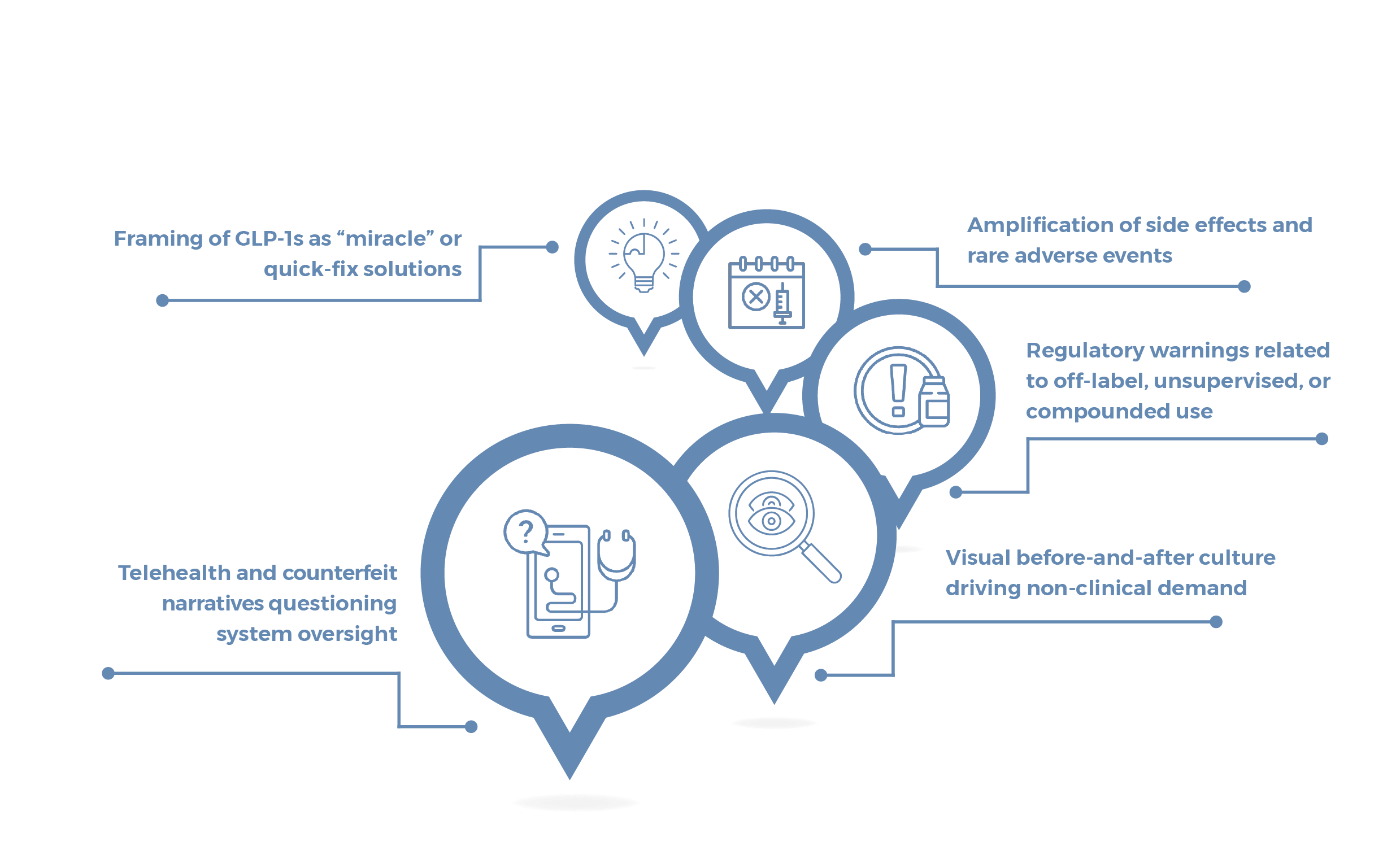
But visibility comes with volatility. The same narratives that celebrate breakthrough innovation are quickly matched by concerns around safety, access, affordability, misuse, and equity. FINN Partners’ proprietary data from its Global Intelligence Lab shows that narratives around risk and fairness now travel just as fast as innovation-led stories. In the GCC’s hyper-connected media environment, perception can shift overnight.
This is where health communication moves from a support function to a strategic lever. The way innovation is explained, contextualised, and governed in the public domain increasingly determines whether it is trusted, regulated, reimbursed, or resisted.
From reactive messaging to proactive narrative stewardship
Historically, healthcare communication focused on awareness and product education. That playbook is no longer sufficient. The GCC is now operating in an environment where innovation often outpaces policy frameworks, and where global narratives instantly localise, sometimes without cultural or clinical context.
The report highlights a critical inflection point that organisations must move from reactive messaging to proactive narrative stewardship. This means shaping long-term understanding. It means anchoring innovation stories in prevention, system sustainability, and national priorities such as Saudi Vision 2030 and We the UAE 2031.
Healthcare communications in the GCC now sit at the intersection of science, policy, culture, and trust. Missteps such as over-claiming benefits, under-communicating risks, or ignoring equity concerns can quickly trigger backlash, regulatory scrutiny, or reputational damage.
Six pillars redefining health communication leadership
To navigate this complexity, the report outlines a strategic six-pillar framework that reflects how communication must evolve in the region.
1) Evidence and transparency: GCC stakeholders should respond to robust data, particularly local real-world evidence. Credibility is built by leading with facts.
2) Prevention-first framing: Innovation must be positioned as part of a broader metabolic health ecosystem that includes nutrition, physical activity, early screening, and behaviour change, not as a shortcut or cosmetic fix.
3) Local data generation: Imported global narratives are no longer enough. GCC-specific insights strengthen policy alignment, reimbursement discussions, and public trust.
4) Multi-stakeholder partnerships: In the GCC, collaboration with ministries, insurers, professional societies, and employers signals long-term commitment.
5) Access and affordability storytelling: Equity is no longer a secondary issue; it is central to how innovation is judged.
6) Rapid-response safety messaging: In an era of misinformation, counterfeit products, and viral dupe culture, organisations must be prepared to protect patient safety and counter false narratives in real time.
Together, these pillars reposition healthcare communications in the GCC as a system-strengthening force. Download the full report to discover how innovation, equitable access, and behavioural change are reshaping the future of metabolic and lifestyle health across the GCC.